
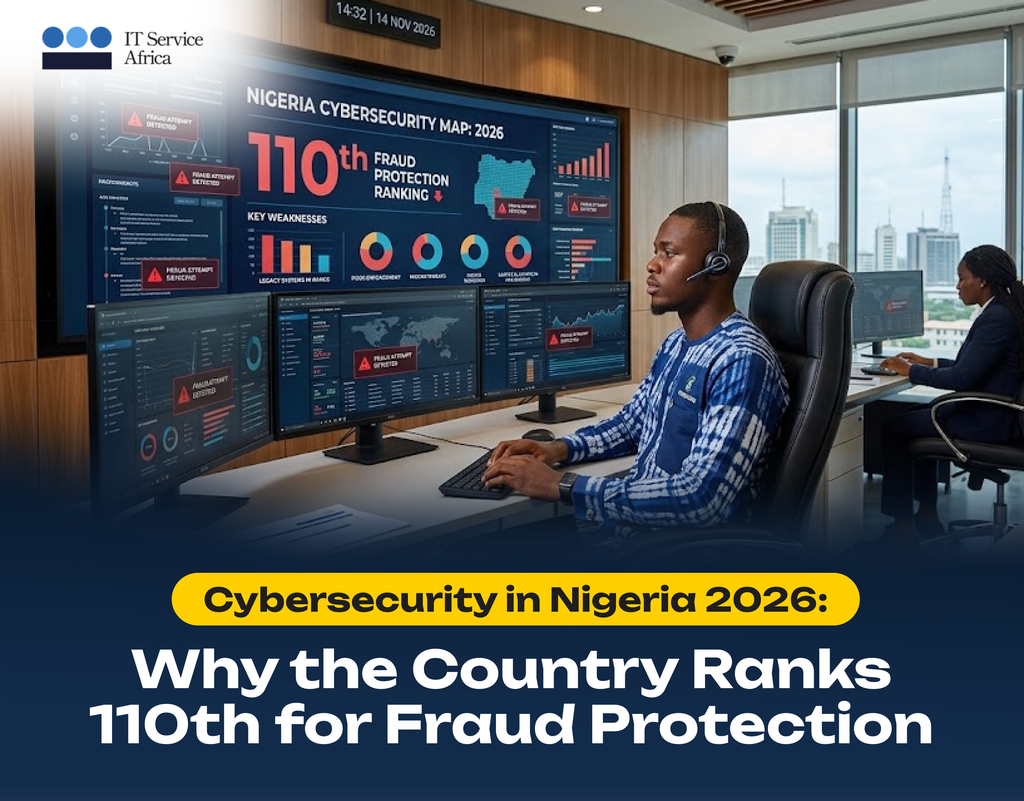
A new report explains exactly why that search matters right now. The Compliance Reckoning: Regulating Financial Services in the Age of AI produced by Adhere and TechCabal found that Nigeria processes more than 10 billion real-time transactions a year, yet ranks 110th out of 112 countries for fraud protection.
The same report found AI-enhanced fraud is now 4.5 times more profitable for criminals than traditional methods.
Fewer Attacks, Bigger Losses
Reported fraud cases actually fell by about 31% but losses per incident went up. Attackers aren’t spraying and praying anymore; they’re using AI to study specific targets and strike with precision. This is exactly the shift behind rising searches for “AI cybersecurity threats Nigeria” and “cyber fraud prevention for businesses.”
Why Regulation Is Tightening So Fast
The Central Bank of Nigeria has issued 17 regulatory actions on cybersecurity, data protection, and anti-money laundering in just 14 months ,six with mandatory deadlines running through 2028. A ₦15.42 billion fine on one major bank in 2025 made it clear: non-compliance is no longer just reputational risk, it’s a balance-sheet risk.
This Isn’t Just a Bank Problem
If you’ve ever searched “do small businesses need cybersecurity in Nigeria,” the honest answer is yes. Any business that takes digital payments, stores customer data, or runs on connected systems shares this same threat landscape usually without a bank’s compliance budget or dedicated security team.
How to Build Real Protection at Your Scale
- Layered security — perimeter, network, application, and data protection working together, not a single antivirus tool
- AI-aware threat detection — monitoring built to catch the same sophistication attackers now use
- Regular vulnerability assessments and penetration testing — find your weak points before someone else does
- A documented incident response plan — because “we’ll figure it out” is not a plan
ITSA’s Enterprise Cybersecurity service builds layered, AI-aware protection sized for growing businesses.
Request a security assessment at itserviceafrica.com.
A large transaction volume combined with a smaller cybersecurity workforce and historically slower regulatory response has left a gap that attackers are exploiting.
Yes. SMEs are increasingly targeted precisely because they often have weaker defenses than large banks or enterprises.
AI-enhanced fraud uses automation and data analysis to personalize attacks at scale, making them more convincing and significantly more profitable per successful attempt.
Leave a Comment