IT Service Africa

Artificial Intelligence

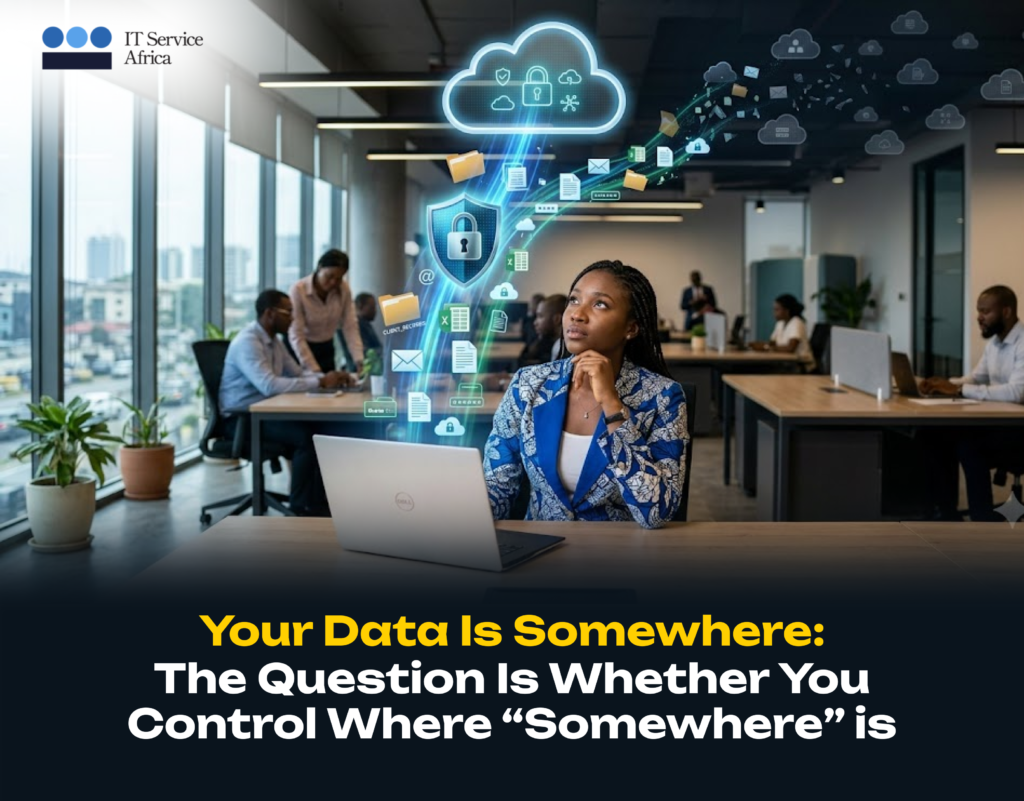
Your Data Is Somewhere. Do You Actually Know Where?

Artificial Intelligence, Tech Solution, Uncategorized

Ask a Nigerian business owner where their data lives. You will hear, “In the cloud.” Ask which cloud. They go quiet. Ask where the servers are, or what the backup policy is. Finally ask what happens if the subscription lapses and they go quiet. This is not ignorance. Cloud adoption in Nigeria moved fast. It moved without a plan. It happened one subscription at a time. One problem was solved at a time. Now, company data is scattered across platforms that nobody fully controls. In 2026, the NDPA is actively enforced. This situation has real consequences. You Did Not Choose a Cloud Strategy. You Inherited One. It started with a slow accounting system. Someone suggested QuickBooks Online, Google Drive for files and Microsoft 365 for Teams. Each decision solved an immediate problem. None of them were part of a larger plan. Now, company data sits across multiple platforms. Each has different access rules and backup settings. Each has different compliance implications. Nobody has joined them together. What Are the Questions You Should Ask? The Fix Is Simpler Than You Think Most businesses do not need to move everything back on-premise. They just need clarity, what they have and where it lives and also must check if it is set up correctly. A cloud audit typically finds 15 to 30 percent in savings. This comes from unused licences alone. Beyond savings, it surfaces compliance gaps. It highlights security misconfigurations that most businesses carry without knowing. ITSA helps businesses across Nigeria run that audit, close the gaps and build a setup that is secure and compliant. It is built for how your business actually runs today, not how it got set up in 2019. “We are in the cloud” is a starting point, not a strategy. 📧 support@itserviceafrica.com | 📞 07079935788

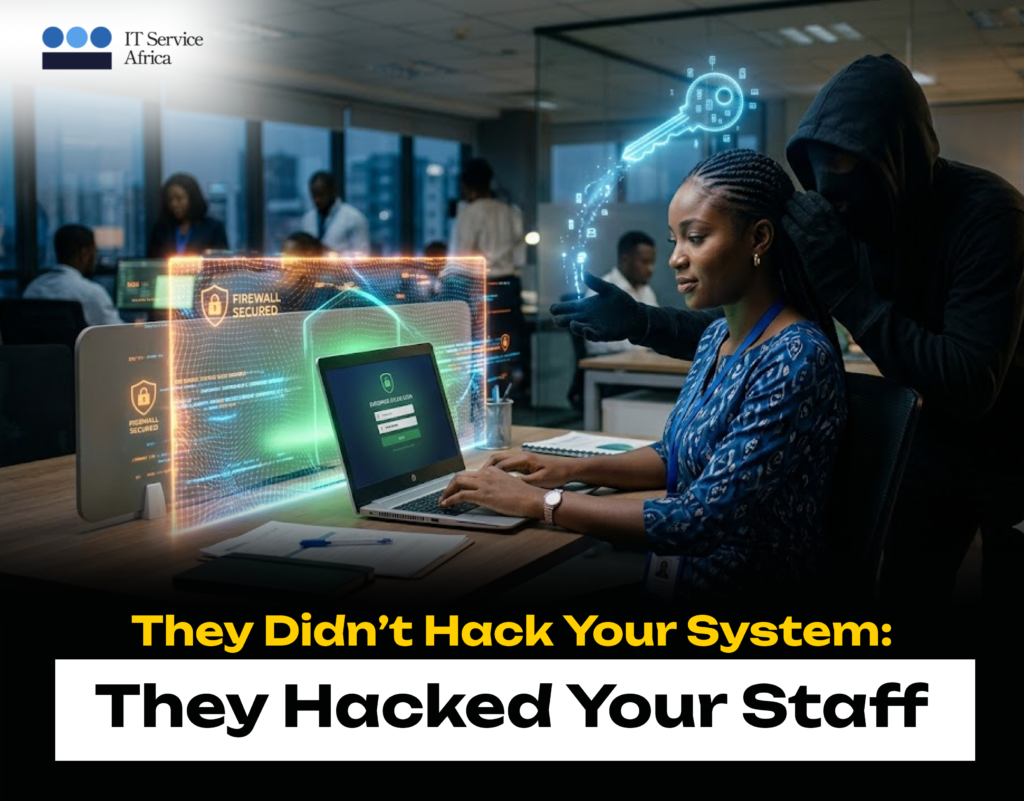
They Didn’t Hack Your System: They Hacked Your Staff

Artificial Intelligence, Device Health Management Services(DHMS), General Category, Tech news update, Tech Solution, Technology

The attacker never touched a server; it took just one email, one link, and one finance officer who thought she was logging into her company’s bank portal. Three transfers left the account and nobody saw it coming because no firewall stopped it and no code triggered an alert. Someone manipulated a person in under three minutes and walked away with everything they needed. This is social engineering, and right now, it is the most common way attackers are hitting Nigerian businesses. Stop picturing a hacker in a dark room writing code. The most effective attacks today skip your systems entirely and go straight for the person at the desk. Social engineering exploits trust, urgency, fear, and the human desire to be helpful. You cannot patch those qualities out of your team, as they are what make people good at their jobs, but attackers simply know how to use them. No firewall in the world stops an employee who genuinely believes they are following a legitimate instruction. Here Is What Attackers Are Actually Doing Right Now Why Nigerian Businesses Keep Falling for This This is not a criticism of Nigerian professionals, but rather an observation about how most Nigerian organisations operate. When the MD sends an urgent message, people respond immediately. When someone calls claiming to be from the bank, the instinct is to help quickly. Similarly, when a “new IT staff member” needs access to fix something urgently, turning them away feels obstructive. Attackers study these patterns and build their entire approach around them. The speed and deference that make organisations run efficiently are the exact same qualities that social engineering turns into a weapon. Training Your People Stops This: Nothing Else Will You cannot buy a tool that fixes this problem, as no software catches every manipulated human being. What works is teaching your team to pause and to treat urgency itself as a warning sign rather than a reason to move faster. They must learn to notice when a request feels slightly off, even if they cannot immediately explain why, and feel empowered to verify without worrying about being obstructive. ITSA’s security awareness training builds these habits across your entire team through structured programmes that change real behaviour, rather than one-off sessions people forget by the end of the week. We also run simulated phishing exercises so you can see the actual numbers—how many people click, what changes after training, and where the gaps remain. One trained person can stop an attack that no firewall would have caught, while one untrained person can undo everything. Which type does your team have more of right now? Book a security awareness session for your team today.  📧 support@itserviceafrica.com

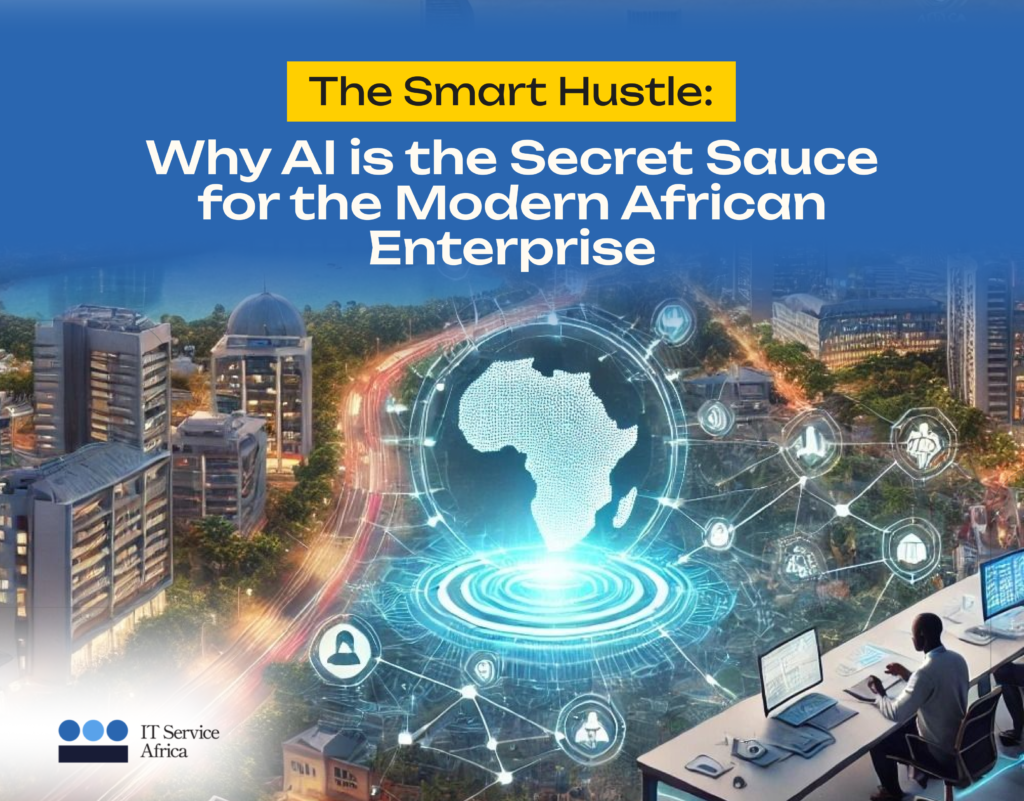
The “Smart Hustle”: Why AI is the Secret Sauce for the Modern African Enterprise

Artificial Intelligence

The Feeling: Beyond the “Robot Apocalypse” Memes  If you’ve spent any time on social media lately, you’ve seen the memes: robots taking over the world, or AI accidentally writing a “Naija” love letter that sounds a bit too stiff but in the boardrooms and the industrial zones, the conversation about Artificial Intelligence (AI) is much more grounded.  It’s not about science fiction; it’s about a very real, very human desire to stop wasting time on the boring stuff so we can focus on the big wins. The Struggle: Death by a Thousand Manual Tasks  Let’s be real, the “African Hustle” is legendary, but it’s often slowed down by what we call “digital friction.” We’re talking about that mountain of invoices waiting for manual data entry, or the constant human errors in repetitive workflows that lead to “Oga” having to sign off on the same document five times.  This isn’t just tiring; it’s an efficiency killer in a global market that doesn’t wait for anyone. At IT Service Africa (ITSA), we see AI as the tool that finally lets you work smarter, not harder. Process Re-engineering: Giving Your Business a Brain Upgrade  We don’t just “drop” AI into your office and wish you luck. Our Transformation Journey starts by looking at your current bottlenecks. We use Process Re-engineering to analyze and redesign how you work, then supercharge those new paths with: The Human Outcome: Productivity with a Smile  The goal of AI-driven intelligence isn’t to replace the brilliant minds in your office; it’s to free them so that they can stay innovative. In the industrial sector, this looks like AssetNova, which uses AI to predict equipment failure with 94%+ accuracy, saving companies 30-40% in costs. That’s not just “tech”—that’s a better bottom line and a less stressed-out workforce. Your Partner in the Digital Age As a 100% Nigerian-owned company with a Pan-African focus, we understand that our businesses need technology that is both world-class and practical. We build custom AI/ML models that fit the unique challenges of the continent, ensuring your operations are streamlined and data-driven. Are you ready to move from the “Manual Past” to the “Intelligent Future”?  [Schedule an AI Discovery Session with ITSA today] and let’s see how we can automate your success.

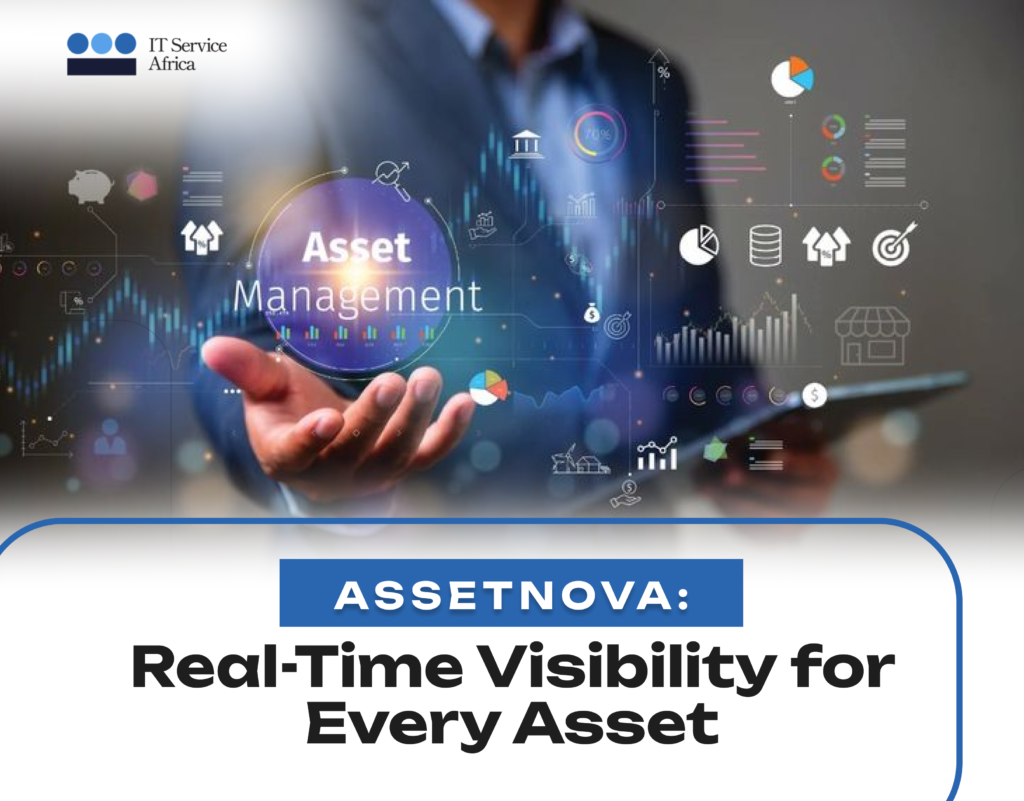
The Crystal Ball for Industry: How AssetNova is Ending the Guessing Game

Artificial Intelligence, Blogs

The High Cost of “The Machine is Down”  In the world of manufacturing, mining, and oil & gas, the most expensive sound is silence—the silence of a machine that has unexpectedly stopped working. For years, the industry standard was to “wait and see,” fixing expensive equipment only after it failed. It’s a stressful, expensive way to live. But what if you could see the future? Meet Your New Best Friend: AssetNova  AssetNova is our AI Asset Intelligence platform, designed to be the “crystal ball” for critical infrastructure. It connects directly to your existing SCADA and IoT sensors to perform real-time ML analysis. Instead of waiting for a breakdown, AssetNova spots the tiny anomalies—the digital “coughs”—that signal a future failure. 94% Accuracy is Not a Typo This isn’t just high-tech hype. Asset Nova delivers a staggering 94%+ prediction accuracy. By predicting failures before they happen, our partners see a 30-40% reduction in maintenance costs. It even prescribes actions, automatically generating work orders and planning crew schedules so you are always one step ahead. In a tight global economy, this kind of efficiency is the difference between leading the market and falling behind. Stop guessing and start predicting.  Discover the power of AssetNova AI.

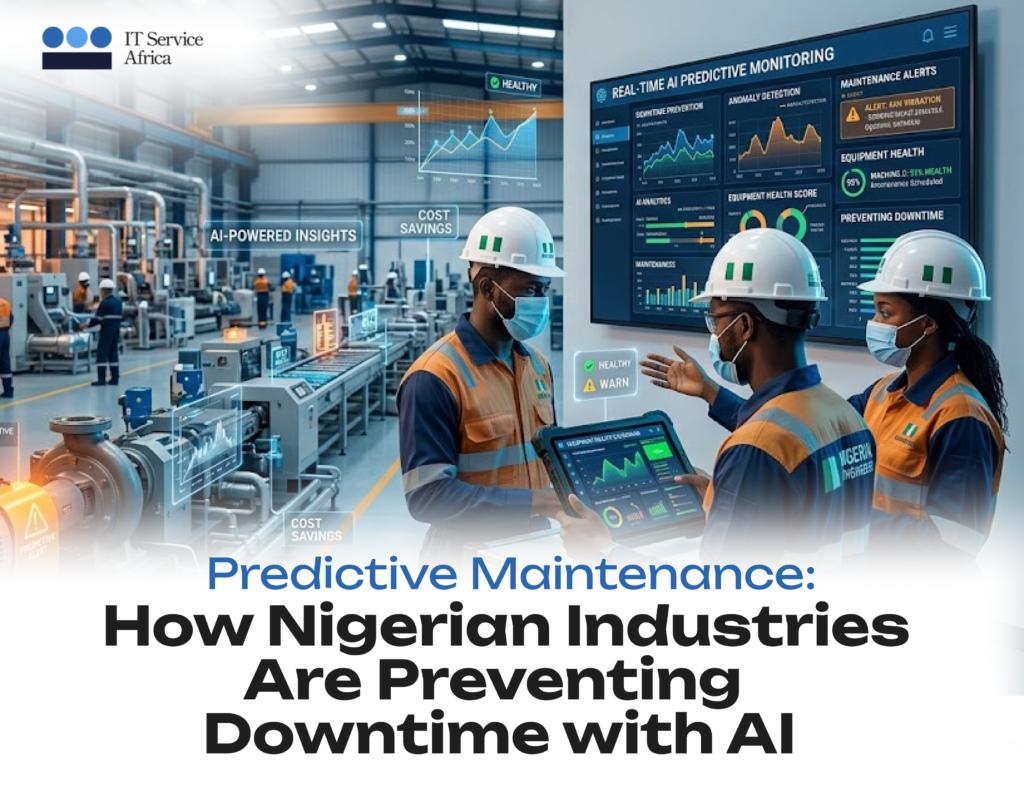
Predictive Maintenance: How Nigerian Industries Are Preventing Downtime with AI

Artificial Intelligence, Blogs, Managed Services, Tech news update

Equipment failure is expensive anywhere. In Nigeria, where supply chains are long, technical expertise is scarce, and margins are tight, unplanned downtime can be catastrophic. A single generator failure during peak production, a conveyor breakdown at a critical moment, or a pump failure at an industrial site creates costs far beyond the repair bill. AssetNova changes this equation. By predicting failures before they happen, this AI-powered platform helps Nigerian organizations shift from reactive firefighting to proactive control thereby transforming maintenance from cost center to competitive advantage. The Maintenance Challenge in Nigerian Industry Nigeria’s industrial sector faces distinctive pressures: Traditional maintenance approaches either “run until it breaks” or rigid scheduled maintenance all fail to address these realities efficiently. The True Cost of Equipment Failure When critical assets fail unexpectedly, Nigerian businesses pay multiple prices: Immediate Production Losses Every hour of stopped production is revenue lost forever. For a manufacturing line generating ₦10 million daily, a two-day outage costs ₦20 million in lost output alone. Emergency Repair Premiums Rush shipping for parts, overtime labor, and expedited service contracts multiply normal maintenance costs by 3-5x or more. Secondary Damage Initial failures often cascade damaging connected equipment, contaminating production batches, or creating safety incidents. Customer and Contract Penalties Missed delivery deadlines, broken service agreements, and damaged relationships create lasting business consequences. Regulatory and Safety Risks Equipment failures in regulated industries create compliance violations and potential liability exposure. How AssetNova Predicts and Prevents Failure AssetNova applies machine learning to equipment data transforming maintenance from calendar-based guesswork to condition-based precision: Continuous Monitoring Sensors track vibration, temperature, pressure, electrical current, and other indicators of equipment health. Data flows from SCADA systems, PLCs, IoT devices, and historians into a unified analytics platform. Pattern Recognition AI models learn normal operating patterns for each asset and then detect subtle deviations indicating developing problems. These patterns are invisible to human observation but obvious to machine intelligence. Failure Prediction Rather than vague “something might be wrong” alerts, AssetNova provides specific failure predictions with confidence intervals and time horizons—”Bearing failure likely in 14-21 days” rather than “Check bearing.” Prescriptive Action The platform automatically generates work orders, schedules maintenance crews, orders required parts, and optimizes maintenance timing to minimize production impact. Continuous Learning As more data accumulates, prediction accuracy improves. AssetNova achieves 94%+ prediction accuracy in typical deployments, with 30-40% total maintenance cost reduction. Designed for Nigerian Industrial Realities AssetNova addresses specific challenges Nigerian organizations face: Air-Gapped and Hybrid Deployment For security-sensitive operations in energy, defense, and critical infrastructure, AssetNova deploys in isolated environments without external connectivity maintaining security while delivering intelligence. Integration with Existing Infrastructure The platform connects with existing SCADA systems, historians, and control systems without requiring wholesale infrastructure replacement protecting capital investment. Support for Critical Industries Rapid ROI Typical implementations show return on investment within 6-8 weeks through prevented failures and optimized maintenance scheduling. The Transformation Journey Implementing predictive maintenance follows a structured path: Assessment Review current maintenance practices, identify critical assets, and evaluate data availability. Data Integration Connect relevant data sources—SCADA, IoT sensors, maintenance records, operational parameters. Model Training AI models learn equipment-specific patterns using historical data, refined through expert input. Pilot Validation Test predictions against actual outcomes, refine thresholds, and build organizational confidence. Scale and Optimize Expand to additional assets, integrate with maintenance management systems, and continuously improve. Building Resilient Operations For Nigerian industries, AssetNova enables: Conclusion AssetNova provides the predictive intelligence organizations need to transform maintenance from reactive cost to proactive advantage. For Nigerian manufacturers, energy operators, miners, and critical infrastructure providers, AI-powered predictive maintenance is no longer futuristic technology. It is available, proven, and essential for sustainable operations.

The Beauty of Bespoke Software: Built for You

Artificial Intelligence, Blogs

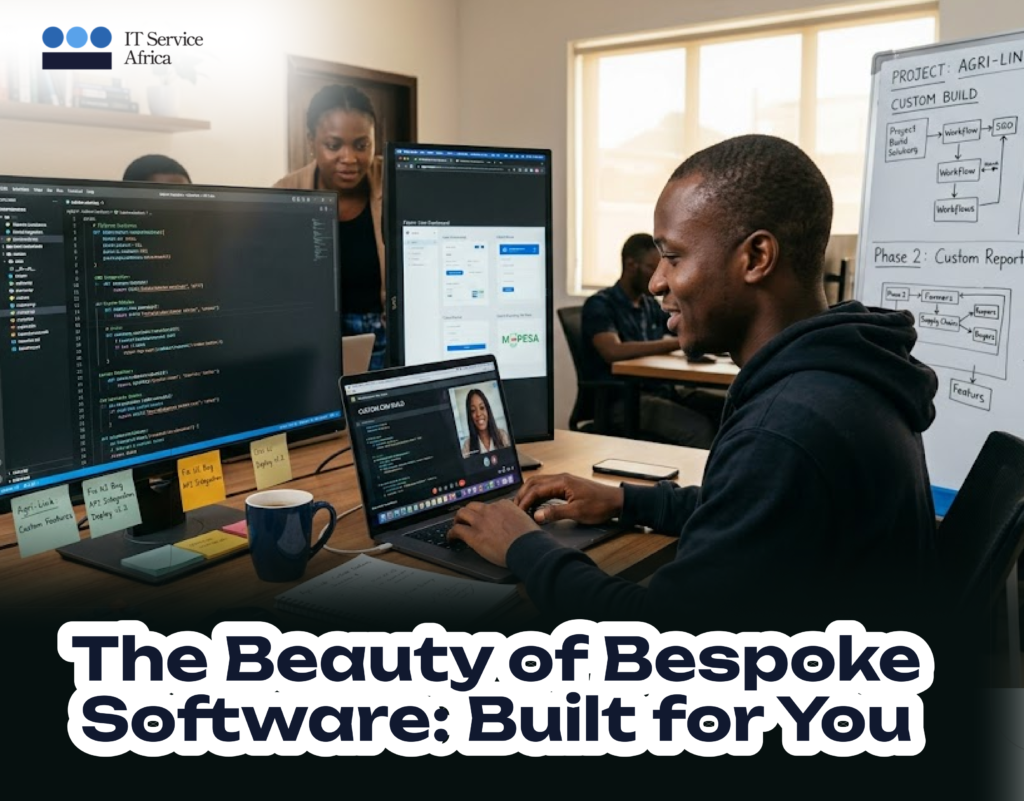
Most businesses today rely on software to run their operations. From managing customers to tracking finances, technology plays a central role. However, many organizations use generic software that was not designed specifically for their needs. This is where bespoke software stands out. What is Bespoke Software? Bespoke software is custom-built to meet the unique needs of a specific business. Unlike off-the-shelf solutions, it is designed with your processes, goals, and challenges in mind. It is not about adjusting your business to fit the software.It is about building software that fits your business. Why Generic Software Falls Short While ready-made software is convenient, it often comes with limitations: Over time, these limitations can slow down operations. The Advantages of Bespoke Solutions Bespoke software offers several key benefits: i) Tailored FunctionalityEvery feature is built to support your specific workflow. ii) ScalabilityThe system grows as your business grows. iii) EfficiencyProcesses become faster and more streamlined. iv) Competitive AdvantageYou gain tools that competitors may not have. When Does a Business Need Bespoke Software? A business may need custom software when: The Long-Term Value Although bespoke software requires an initial investment, it often delivers greater value over time. Instead of constantly adapting to limitations, businesses can operate with systems that truly support them. Conclusion The beauty of bespoke software lies in its simplicity; it works the way your business works. In a world where efficiency and adaptability matter more than ever, having the right tools can make all the difference.

AI and Nigeria: Unlocking a Smarter Future

Artificial Intelligence, Blogs

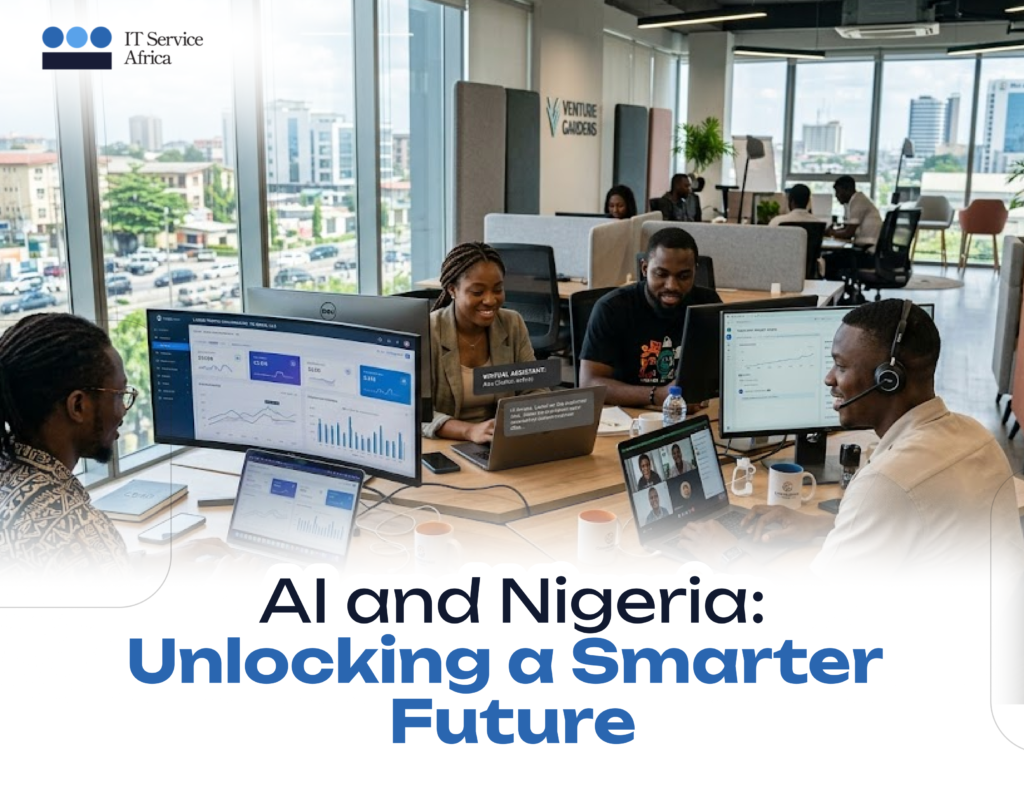
When people hear about Artificial Intelligence (AI), they often think of robots, automation, or futuristic systems taking over jobs. While these ideas are popular, the reality of AI is far more practical and relevant especially for a growing economy like Nigeria. AI is not just about machines. It is about making smarter decisions, improving efficiency, and creating new opportunities across industries. Understanding how AI can benefit Nigeria is an important step toward embracing its full potential. What is Artificial Intelligence? Artificial Intelligence refers to systems or machines that can perform tasks that typically require human intelligence. These include learning, problem solving, decision-making, and pattern recognition. AI is already being used in everyday tools such as: Rather than replacing humans, AI works best when it supports human effort. Where Nigeria Can Benefit from AI Nigeria is a country full of potential, and AI can play a major role in unlocking it across different sectors. i) Financial ServicesAI can improve fraud detection, automate customer service, and enhance credit-scoring systems. ii) HealthcareFrom early diagnosis to patient data management, AI can help improve healthcare delivery and access. iii) AgricultureAI can assist farmers with weather predictions, crop monitoring, and yield optimization. iv) Business OperationsOrganizations can automate repetitive tasks, analyze data faster, and make better decisions. Challenges to Consider While AI offers many benefits, there are still challenges that need to be addressed: Addressing these challenges is key to maximizing AI adoption. The Role of Businesses in AI Adoption Organizations do not need to fully understand AI to benefit from it. What matters is knowing where it can improve operations. Businesses that adopt AI early often gain advantages such as: Conclusion AI is not a distant concept, it is already shaping how businesses operate globally. For Nigeria, it presents an opportunity to leap forward, improve systems, and drive innovation. The future is not about choosing between humans and AI, but about combining both to achieve better results.

Why Cybersecurity Matters More Than Ever in 2026

Artificial Intelligence, Blogs

In today’s digital world most of the things  we do happen online, from shopping, banking, ordering food, paying bills to communicating. While this has transformed our lives to be easier and more convenient, it has also created numerous opportunities for cyber criminals. Cybersecurity is no longer just a concern for big organisations, it has become very essential for individuals, businesses and the government. The Growing Threat of Cyber Attacks Cyber attacks are unfortunately increasing at a very alarming rate. Threat actors are constantly developing new ways and techniques to exploit vulnerabilities in systems and networks. Some of the most common threats, include; i) Phishing Attacks: Fake emails or messages designed to trick users into revealing sensitive information such as passwords or bank details. ii) Ransomware: Malware that locks or encrypts a victim’s data and demands payment to restore access. iii) Data breaches: Unauthorized access to confidential information, often affecting millions of users at once. iv) Malware infections: Malicious software designed to disrupt, damage, or gain unauthorized access to systems. These attacks can lead to reputational damage, financial losses and even put national security at risk.  Why Cybersecurity Is Important Cybersecurity helps protect systems, networks, and data from cyber attacks. Without proper security controls and measures, sensitive information such as personal data, financial records, and intellectual property can easily fall into the wrong hands. For organizations, strong cybersecurity practices ensure: i) Protection of customer data ii) Business continuity iii) Compliance with regulations iv) Trust and credibility with users For individuals, cybersecurity helps protect  i) personal privacy  ii) financial security  The Role of Cybersecurity Professionals Cybersecurity Professionals play a vital role in protecting systems and networks from threats. They use tools and techniques such as vulnerability assessment, penetration testing and security monitoring tools to be able to detect and prevent attacks before they can cause any harm to the systems or networks. Roles in cybersecurity include: i) Security analysts ii) Ethical hackers iii) Incident responders iv) Cloud security engineers v) Threat intelligence analysts As Cyber threats evolve, the demand for skilled cybersecurity professionals continues to increase worldwide. How Individuals Can Stay Safe Online While most organizations invest heavily in security tools and techniques, individuals also have to be able to protect themselves online. Some simple but effective cybersecurity practices include: i) Using strong and unique passwords ii) Enabling multi-factor authentication (MFA) iii) Avoiding suspicious links and attachments iv) Keeping software and devices updated v) Backing up important data regularly Even small security habits can significantly reduce the risk of cyber attacks. The Future of Cybersecurity  With the rise of artificial intelligence (AI), cloud computing, and the Internet of Things (IoT), the cybersecurity landscape is constantly evolving. While these technologies bring innovation and efficiency, they also introduce new vulnerabilities and endpoints to be exploited by cyber criminals. In order to stay ahead of these threats, organizations must adopt proactive security measures, invest in advanced security tools or technology and continuously train cybersecurity professionals. Conclusion Cybersecurity is no longer a choice, it is a necessity in this Computerized age. As technology continues to shape our lives, protecting digital assets and sensitive information must become a top priority. By combining strong security practices, advanced technologies and user awareness, we can build a safer digital future for everyone.

How Bespoke Software helps Businesses Work Smarter & Grow: Part 3

Artificial Intelligence, Blogs, Family, Technology

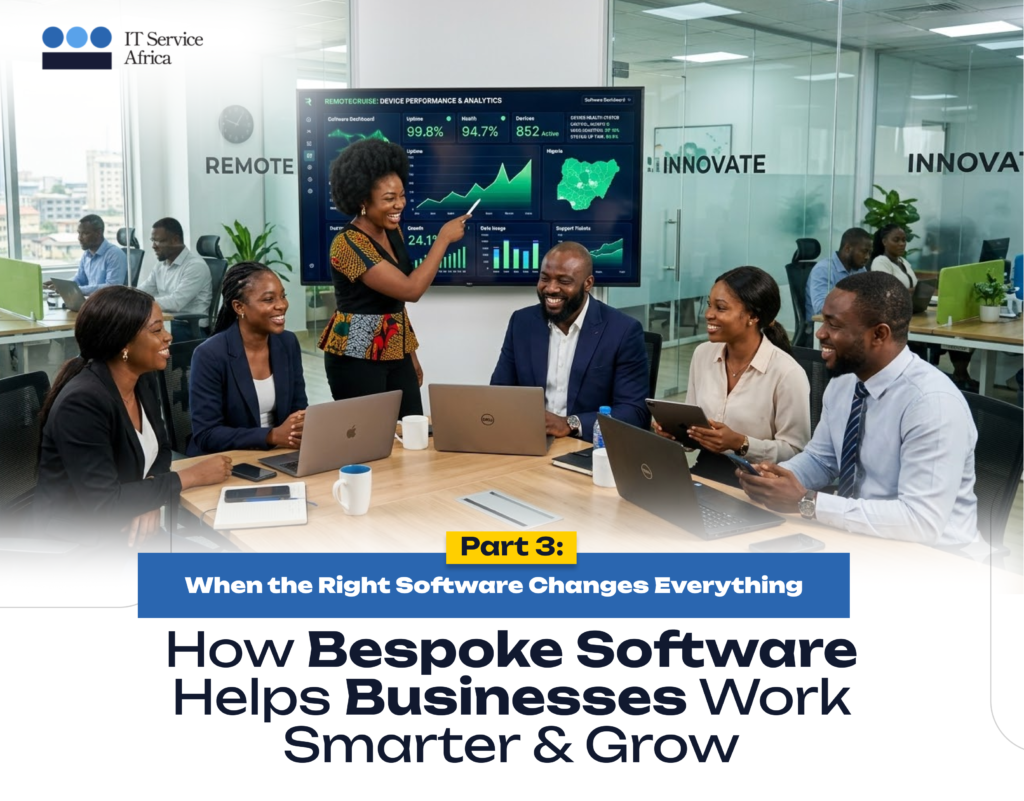
By now, Tunde and Ada had taken the leap. After months of working around disconnected systems and manual processes, they finally had something new in place, which is a software designed specifically for how their businesses operate. And the difference showed up faster than they expected. For Tunde, the constant phone calls from drivers started to disappear. Routes, deliveries, and updates were all tracked in one system. Drivers could see their assignments instantly, and customers could receive real-time updates without needing to call the office. What used to feel chaotic now felt… organised. His team spent less time chasing information and more time actually delivering great service. For Ada, the biggest relief was visibility. Inventory, orders, and sales were finally connected. Instead of reconciling numbers across multiple systems every week, everything is updated automatically in one place. The hours she once spent fixing errors could now be spent improving operations and planning the company’s next move. And that’s often the real impact of bespoke software. It does not just improve systems; it changes how a business operates. Teams move faster.Decisions become clearer.Growth becomes easier to manage. What once felt like constant problem-solving turns into smooth, reliable processes that support the business instead of slowing it down. For companies like Tunde’s and Ada’s, bespoke software isn’t about having something fancy or complex. It is about having tools that finally fit the way they work. The Bigger Picture Every business grows in its own way, and the systems supporting it should grow too. That is why more organisations are turning to bespoke software development, which are solutions designed around their goals, workflows, and future plans. Because when the right systems are in place, businesses do not just run better they move forward with confidence. Ready to build software that truly works for your business? At IT Service Africa, we design and develop bespoke software solutions that help organisations streamline operations, improve efficiency, and scale with ease. Let us build something that works for you. 

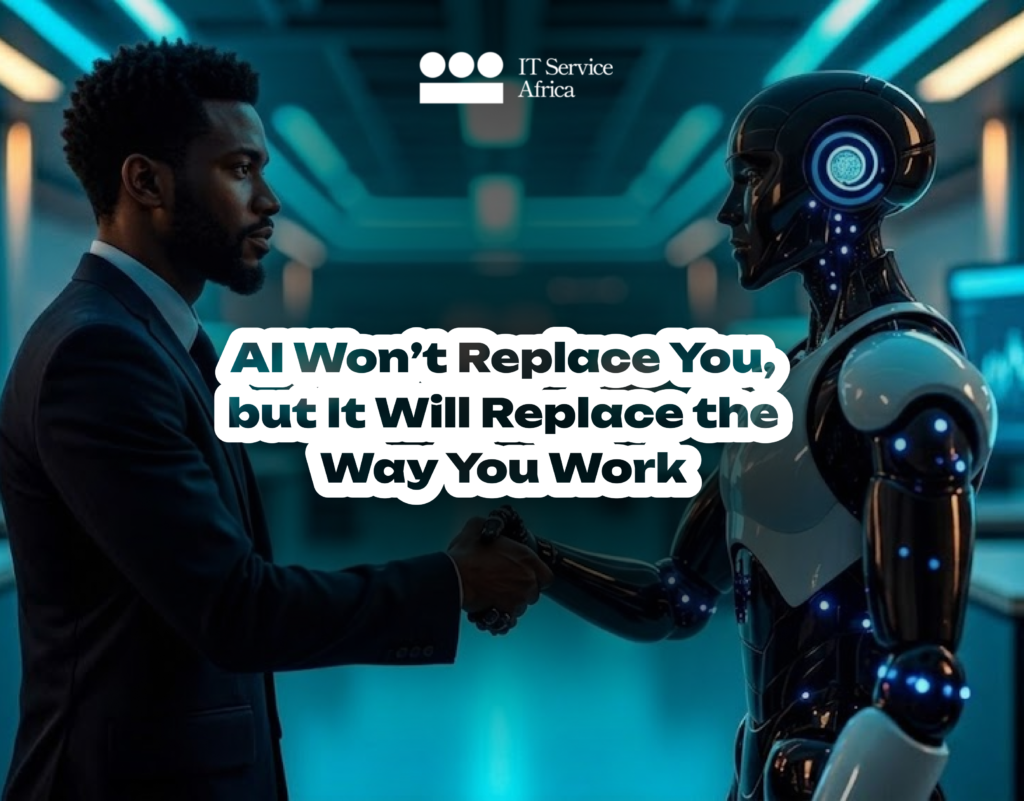
AI Won’t Replace You, But It Will Replace the Way You Work

Artificial Intelligence, Blogs, Family, Weekly update

The AI Conversation Businesses Can’t Afford to Avoid Let’s address the elephant in the boardroom:No, AI is not coming to take everyone’s jobs. But it is coming for inefficiency, wasted time, manual processes, slow reporting, poor customer response times, and guesswork decision-making. And honestly? That’s a good thing. What AI Actually Does for Businesses Think of AI as the world’s most efficient assistant. It doesn’t sleep, It doesn’t forget and It doesn’t complain about repetitive tasks. Here’s how businesses are already using it: AI handles the repetitive.Your team handles the strategic. That’s not replacement, that’s an upgrade. The Real Advantage: Better Decisions Data is everywhere. But insight?… That’s rare. AI can analyze thousands of data points in minutes and highlight patterns that would take teams weeks to uncover. That means: And here’s the slightly humorous truth:AI won’t take your job but someone using AI might. The Human Element Still Wins Creativity. Emotional intelligence. Strategy. Leadership. Relationship building. The businesses that thrive won’t be the ones resisting AI.They’ll be the ones integrating it intelligently. The Bottom Line AI is not a threat.It’s a tool. And like every powerful tool in history, the real advantage belongs to those who learn how to use it. Ready to Make AI Work for Your Business? If you’re exploring how AI can streamline operations, improve efficiency, and unlock smarter growth, now is the time to act. Let’s move from curiosity to strategy…

Scroll to Top