IT Service Africa

Blogs

Data Breaches Don’t Knock, They Log In

Blogs, General Category, Managed Services, Weekly update

Most breaches don’t start with dramatic hacking scenes.They start with one weak password. One phishing email. One delayed update. And while businesses assume, “We’re probably fine,” attackers are busy automating their next attempt. A data breach today doesn’t just mean stolen files. It can mean downtime, damaged trust, regulatory questions, and expensive recovery. The real risk isn’t visibility, it’s silence. Many companies don’t even realize they’ve been compromised until weeks later. Cybersecurity isn’t about paranoia. It’s about preparation. That means: Because when something does happen, the first question won’t be ‘who attacked us’?It will be ‘were we prepared’? At ITSA, we focus on proactive cybersecurity, identifying vulnerabilities before they become incidents, strengthening your systems, and keeping your business resilient. If you’re unsure how exposed your systems are, that’s the best time to check. Let ITSA assess, secure, and strengthen your digital environment before someone else tests it for you.

AI Won’t Replace You, But It Will Replace the Way You Work

Artificial Intelligence, Blogs, Family, Weekly update

The AI Conversation Businesses Can’t Afford to Avoid Let’s address the elephant in the boardroom:No, AI is not coming to take everyone’s jobs. But it is coming for inefficiency, wasted time, manual processes, slow reporting, poor customer response times, and guesswork decision-making. And honestly? That’s a good thing. What AI Actually Does for Businesses Think of AI as the world’s most efficient assistant. It doesn’t sleep, It doesn’t forget and It doesn’t complain about repetitive tasks. Here’s how businesses are already using it: AI handles the repetitive.Your team handles the strategic. That’s not replacement, that’s an upgrade. The Real Advantage: Better Decisions Data is everywhere. But insight?… That’s rare. AI can analyze thousands of data points in minutes and highlight patterns that would take teams weeks to uncover. That means: And here’s the slightly humorous truth:AI won’t take your job but someone using AI might. The Human Element Still Wins Creativity. Emotional intelligence. Strategy. Leadership. Relationship building. The businesses that thrive won’t be the ones resisting AI.They’ll be the ones integrating it intelligently. The Bottom Line AI is not a threat.It’s a tool. And like every powerful tool in history, the real advantage belongs to those who learn how to use it. Ready to Make AI Work for Your Business? If you’re exploring how AI can streamline operations, improve efficiency, and unlock smarter growth, now is the time to act. Let’s move from curiosity to strategy…

From Procurement to Performance: How the Right Devices Improve Productivity

Blogs, Device Health Management Services(DHMS), Managed Services, Repair tips, Tech Solution, Technology

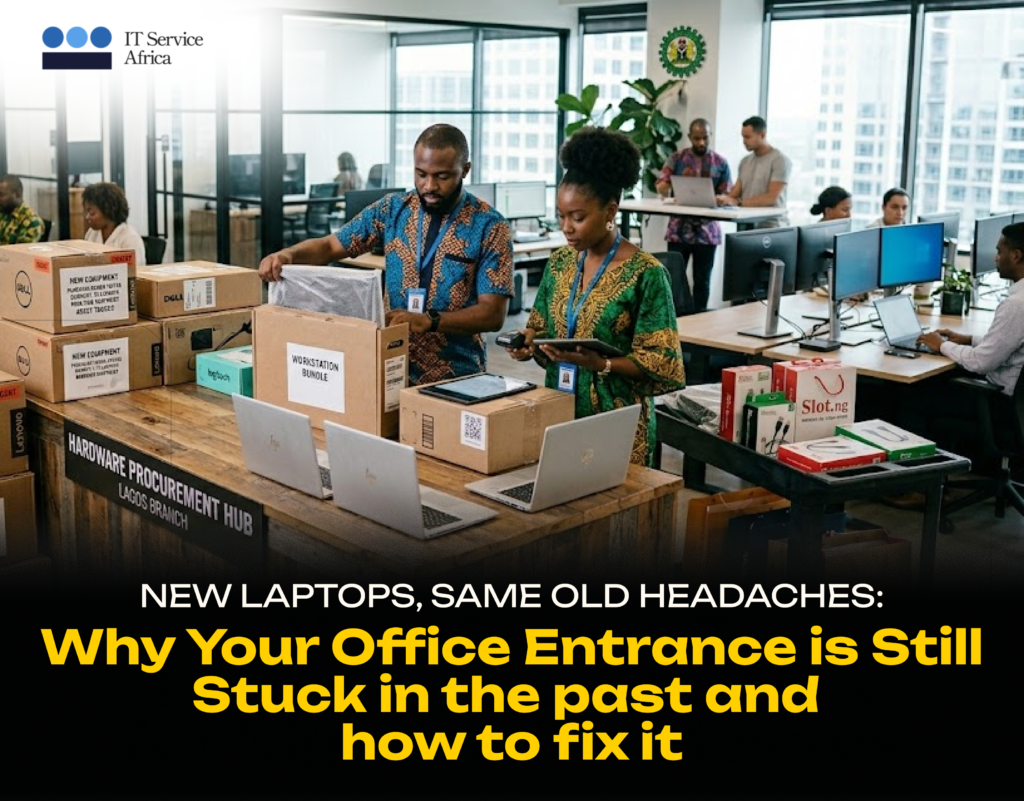
It usually starts off small… A laptop that takes too long to boot,a battery that never quite lasts the workday, and,a system update that breaks an important application. No one files a complaint. People just work around it. Over time, these small workarounds add up, resulting in slower tasks, missed focus, and unnecessary frustration. Productivity does not drop suddenly; it quietly leaks away. Most of the time, the root cause is not the people or the process, but the tools they are using. When devices get in the way, even simple tasks feel harder than they should. Meetings start late. Files take a longer time to load. Support requests have become routine. It is not dramatic, but it is costly. Good device procurement can change this. It begins with an understanding of how people work. Different roles have different needs, and choosing devices based on real usage, not just price, allows work to flow naturally. The right device in the right role removes friction instead of creating it. Consistency is also important. Standardized devices make setup faster, support easier, and security stronger. Employees spend less time figuring out why something works on one system and not another, and more time focused on delivering results. When devices work reliably, people stop thinking about them. They focus on their tasks, goals, and customers. This quiet reliability is what turns hardware from a recurring issue into a genuine productivity driver. At IT Service Africa, device procurement is approached with this mindset, helping businesses equip their teams with tools that support performance, security, and long-term value. Are you ready to turn your everyday devices into productivity drivers?Contact IT Service Africa to discuss procurement solutions designed for performance.

The Managed Services Chronicles: Part 3

Blogs, Managed Services

The Leadership View Grace, the CEO, spends her mornings focused on strategy. Expansion, new markets, and competitive advantage are her priorities. Technology isn’t her focus but she knows it can make or break growth. The Hidden Struggle She recalls past growth spurts where onboarding was chaotic and systems buckled under pressure. Leadership was dragged into troubleshooting instead of strategy. Behind the Curtain The Turning Point When the company doubled its staff, managed services absorbed the strain. Systems scaled, onboarding was smooth, and operations continued without disruption. The Payoff Grace leads boldly, knowing technology is an enabler, not a constraint. Growth is supported, not slowed down. Conclusion Through Ada, David, and Grace, we see the full spectrum of managed services: Managed services are the invisible backbone of business growth. They provide reliability, consistency, and confidence, allowing staff to stay engaged, IT to stay proactive, and leadership to stay strategic. Technology becomes not a concern, but a catalyst for success.

The Managed Services Chronicles: Part 2

Blogs

The Morning Scene David, the IT Specialist, starts his day reviewing dashboards that track system health. To most of the company, everything looks calm. But David knows threats are always lurking. The Hidden Struggle He recalls the chaos of reactive IT: sudden cyberattacks, late patches, unreliable backups. Every incident meant long nights and stressed staff. Behind the Curtain The Turning Point A recent phishing attack was intercepted and neutralized before employees even noticed. Managed services handled it quietly, keeping the business secure. The Payoff David shifts from firefighting to proactive improvements. For him, managed services mean peace of mind. For the company, they mean confidence in security. Let’s Talk If you want your systems to work as hard as your business does without constant oversight or disruption now is the right time to evaluate how your IT is being managed. Reach out to IT Service Desk Africa today to discuss how our managed services can support your operations, strengthen security, and give your team the confidence to focus on growth.

The Managed Services Chronicles: Part 1

Blogs, Managed Services

Every successful business relies on systems that simply work. Emails are sent without delay, applications respond when needed, and data remains secure and reliable. Yet behind this seamless experience lies a hidden world of continuous monitoring, proactive support, and strategic scaling. This is the world of managed services. And in this mini‑series, you’ll step into the nerve centre with three unsung guardians: Ada, David, and Grace. They are the human pulse behind the machines, the strategists in the silent war against chaos. Ready to meet the guardians of your business clockwork? Part 1: Ada’s Day — Productivity Without Disruption The Morning Scene Ada, the Operations Manager, begins her day with flawless workflows. Emails fly out instantly, applications respond without hesitation, and her team dives into work. Everything feels effortless. The Hidden Struggle Ada remembers the frustration of past mornings when systems lagged and projects slowed to a crawl. Now, managed services continuously monitor performance, detect risks, and apply updates before problems ever reach her desk. Behind the Curtain The Payoff Ada’s team stays productive, free from distractions. Technology has become invisible not because it doesn’t matter, but because it works so reliably, she doesn’t have to think about it. Let’s Talk If you want your systems to work as hard as your business does without constant oversight or disruption now is the right time to evaluate how your IT is being managed. Reach out to IT Service Africa today to discuss how our managed services can support your operations, strengthen security, and give your team the confidence to focus on growth.

Cybersecurity Insurance: Should Nigerian Businesses Consider It?

Blogs

Have you heard? Data is the new oil, and just like oil, it attracts thieves. Without cybersecurity insurance, businesses are left vulnerable to digital pirates. From Lagos fintech startups to Abuja law firms, cyberattacks are no longer distant headlines; they are everyday risks. For example, a small fintech company in Yaba wakes up one morning to discover that its customer records have been breached: names, emails, and bank details are all available on the dark web. Customers are furious, and regulators demand answers, and even lawsuits are threatened. Within weeks, the startup that raised ₦300 million last year is gasping for breath. But here’s the twist: if they had cybersecurity insurance, much of the financial blow could have been softened: legal fees, system recovery, and customer compensation. That might have been the difference between survival and collapse. This raises the big question: Should Nigerian businesses start taking cybersecurity insurance seriously? What is Cybersecurity Insurance? Cybersecurity insurance (also called cyber liability insurance) is like health insurance for your business’s digital life. See also Device Health Management System When your systems are hacked, data is stolen, or your services are disrupted, the insurance helps cover costs such as: In plain terms, it’s your financial shock absorber after a cyber disaster. Cybercrime in Nigeria Nigeria is not new to cybercrime. According to Serianu’s Africa Cyber Security Report, Nigeria lost over $550 million to cybercrime in 2016 alone. By 2023, the number had climbed into billions, and losses had continued to rise. And the attacks are not just on big banks. Today, SMEs, schools, hospitals, and even e-commerce shops are prime targets. Why? Hackers know smaller businesses often lack strong defences. Some examples: If global giants can get hit, what chance do smaller Nigerian firms have without protection?  Protect your business here. Why Nigerian Businesses Should Care What Insurance Won’t Do Cyber insurance is not a magic wand. Here’s what it doesn’t do: In short, insurance is a cushion, not a shield. What the World is Doing That means Nigerian businesses are highly vulnerable, and at the same time, early adopters can gain a competitive advantage by being better prepared. Practical Steps for Nigerian Businesses Before jumping into cyber insurance, Nigerian companies should: So, should Nigerian businesses consider cybersecurity insurance? The only valid answer is yes. Not because insurance will stop hackers: it won’t. But because it ensures that when (not if) a cyberattack happens, you won’t carry the weight alone. Cybersecurity insurance is no longer a luxury. For Nigerian businesses in 2025, it’s a survival strategy.

Disaster Recovery for Businesses: How Managed IT Saves You During Crises

Blogs, Managed Services

Imagine waking up one morning to find your servers down, your customers can’t access your services, and your data is inaccessible. Disaster recovery is what you need, not panic.  We’re all very familiar with these stories: floods, power failures, hardware crashes, cyberattacks, and so on. A single disaster can wipe out a day’s revenue, your reputation, or in worst cases, your business itself. That’s where disaster recovery comes in. And when you combine disaster recovery with managed IT services, you get a safety net that keeps your business standing. Let me walk you through what this means and show how ITSA can anchor your business during storms. What Is Disaster Recovery (DR)? In simple terms, disaster recovery is the plan and process to bring back business systems after something bad happens. This could be a fire, flood, system crash, or ransomware attack. It focuses primarily on restoring IT systems, data, and networking capabilities and ensuring you can resume operations. Fortinet explains the different types and planning of disaster recovery. Think of it like a generator. When PHCN goes off, you don’t sit in the dark; you switch to backup. Unless there is no fuel🤪or an inverter.  Disaster recovery works the same way for your business systems. Disaster recovery is a subset of business continuity. While continuity plans look at all aspects (people, operations, supply chains), DR zooms in on the tech side, getting your systems and data back online. Managed IT and Disaster Recovery  Managed IT services are when you outsource your IT needs to a specialist provider who monitors, maintains, and supports your infrastructure proactively. Add disaster recovery to that, and you get: Examples Yes, it happens These stories show what’s possible when you don’t leave your fate to chance. Key Components of a Disaster Recovery Plan A solid DR plan isn’t just a document. It’s a living system. Here are the building blocks: How Managed IT Services Bring It All Together When a managed IT provider (like ITSA) supports your disaster recovery, they do much of the heavy lifting: In short, we become your crisis insurance. Who Benefits? Let me break down who wins from a DR-backed managed IT service: What Makes a Good Disaster Recovery Plan? A disaster recovery plan doesn’t need to be complicated. Here’s what it should cover: Disasters don’t send warnings. When they strike, your systems are tested and so is your resilience. Managed IT with a rock-solid disaster recovery plan is your safety net. It doesn’t just save data, it saves your reputation, your customers and your future. Don’t wait until you’re in a crisis to think about recovery. Let’s build your disaster resilience now.

How to Spot Deepfakes Created by AI

Deepfakes
Artificial Intelligence, Blogs

Deepfakes aren’t just cool tech experiments anymore; they’ve become a tool for deception, manipulation, and misinformation. Powered by AI, these hyper-realistic videos and audios are designed to trick you into believing something false. In this article, we’ll break down what deepfakes are, why they’re dangerous, and most importantly, how to spot AI-generated deepfakes before they catch you off guard. What Is an AI Deepfake? An AI deepfake is a video, audio, or image created using artificial intelligence to make someone appear to say or do something they never did. With advanced tools like deep learning, scammers and bad actors can copy someone’s voice, facial movements, and mannerisms. These fakes can be incredibly convincing, even to the trained eye. The danger? People are using deepfakes to: Why You Should Care Here in Nigeria — and across the globe — fake videos are showing up more often on WhatsApp groups, blogs, and social media platforms. And it’s not just celebrities. Every day, people and business owners are at risk of being impersonated through AI-generated content. Knowing how to detect a deepfake is no longer a nice-to-have; it’s a must. How to Spot Deepfakes Created by AI 1. Watch for Weird Facial Movements Deepfake generators often struggle with the subtle things that make us human , like irregular blinks and facial tension. 2. Pay Attention to the Voice Many AI deepfakes use voice cloning that sounds close, but not quite right. 3. Verify the Source Before you believe or share anything shocking: If you only see it on one shady blog or through a friend-of-a-friend’s WhatsApp message, that’s a red flag. 4. Use Online Tools There are tools and platforms designed to help with deepfake detection: These aren’t foolproof, but they give you a head start. Real-World Risks of Deepfakes This isn’t theory. Deepfakes have: Even business owners and SMEs are being targeted with fake voice notes, scam invoices, and impersonated video messages. ITSA’s Advice: Stay Sharp At ITSA, we help individuals, brands, and organisations understand digital risks, including how to protect themselves from deepfakes. If you’re ever unsure about a video or voice clip, ask: And when in doubt, don’t share it. Final Takeaway How to Spot Deepfakes Created by AI starts with awareness. You don’t need to be an expert, pay attention to the details and think before you click or forward. Remember:Pause. Verify. Don’t fall for digital deception. For more practical tech tips, follow ITSA. We break it down in a way that makes sense for you.

10 Ways Your Remote Staff Can Be Productive 

Remote staff
Blogs, Uncategorized

Do you know what your remote staff are doing? Remember when “working from home” meant an excuse to nap between emails? Yeah, those days are long gone. Remote work is here to stay, and while it has its perks (hello, no traffic!), it also comes with challenges—distractions, lack of motivation, and the occasional NEPA wahala. So, how do you ensure your remote staff stays productive without feeling like they’re stuck in an endless loop of Zoom calls and WiFi troubles? Here are 10 solid strategies to keep your remote team on track. 1. Start the Day with a Proper Routine Picture this: Chinedu rolls out of bed at 8:55 AM for his 9 AM meeting, still in his pajamas, eyes half-closed. By the time he’s fully awake, half the day is gone. A morning routine sets the tone for the day. Encourage your team to wake up early, exercise, shower, and dress like they’re actually going to work—even if their “office” is just a corner of their bedroom. 2. Set Clear Work Hours Just because someone is working from home doesn’t mean they’re available 24/7. You don’t want your staff answering emails at midnight or during Sunday Jollof sessions. Establish fixed working hours and ensure everyone sticks to them. This prevents burnout and keeps productivity high. 3. Create a Distraction-Free Workspace Let’s be real—working from the bed is a scam. Productivity disappears once that duvet pulls you in. A dedicated workspace helps the brain switch into “work mode.” Encourage staff to set up a comfortable desk area with good lighting and minimal distractions. If possible, noise-cancelling headphones can help drown out the neighbour’s generator or unexpected “Up NEPA!” celebrations. 4. Utilize the Right Tech Tools You can’t be running a remote team with just WhatsApp and prayer. The right tools make collaboration seamless. Use apps like: ✅ Slack for instant communication ✅ Trello or Asana for project management ✅ Zoom/Google Meet for meetings ✅ Google Drive for file sharing Good tech removes the confusion of “Who is handling this task?” and prevents the famous “Ah, I thought you were doing it” moment. 5. Set Daily and Weekly Goals Nothing kills productivity faster than waking up and thinking, What exactly am I supposed to do today? Have clear daily and weekly objectives so your team knows their targets. A simple “To-Do List” can turn chaos into clarity. 6. Encourage Regular Breaks Here’s a fun fact: Humans aren’t robots. Shocking, right? Encourage staff to take breaks. The Pomodoro Technique (working for 25 minutes, then taking a 5-minute break) works wonders. Nobody can function at full speed for eight straight hours—not even the most hardworking Nigerian. 7. Foster Team Bonding (Even from Afar!) Remote work can feel isolating. If your team only talks during meetings, there’s a problem. Create virtual team-bonding sessions—game nights, online trivia, or even casual Friday check-ins where you gist about non-work topics. It keeps the team spirit alive. 8. Avoid Meeting Overload Some companies think “Let’s have a meeting” is the solution to every problem. Please, stop it. Only hold meetings when necessary and keep them short and structured. If an email or Slack message can solve it, don’t waste 30 minutes on a Zoom call discussing it. 9. Promote Work-Life Balance Just because someone is at home doesn’t mean they should be working all the time. Encourage staff to log off at closing time. No one should be answering work emails while trying to enjoy their Amala. 10. Provide IT Support for Smooth Operations Nothing frustrates remote workers more than tech issues. Imagine spending half the day troubleshooting WiFi instead of working. Ensure your team has access to reliable IT support, device maintenance, and cybersecurity measures. This reduces downtime and increases efficiency. Final Thoughts Productivity in remote work isn’t about monitoring who’s online 24/7—it’s about creating an environment where work flows smoothly. With the right systems, clear expectations, and good work culture, your team can stay productive without feeling drained. And if you really want to upgrade your remote work setup, investing in IT support and automation can help eliminate unnecessary stress. But hey, that’s a conversation for another day. 😉 Which of these tips do you find most helpful? Let’s discuss in the comments!

Scroll to Top