
Why Is So Much of Africa’s Data Still Hosted Abroad?
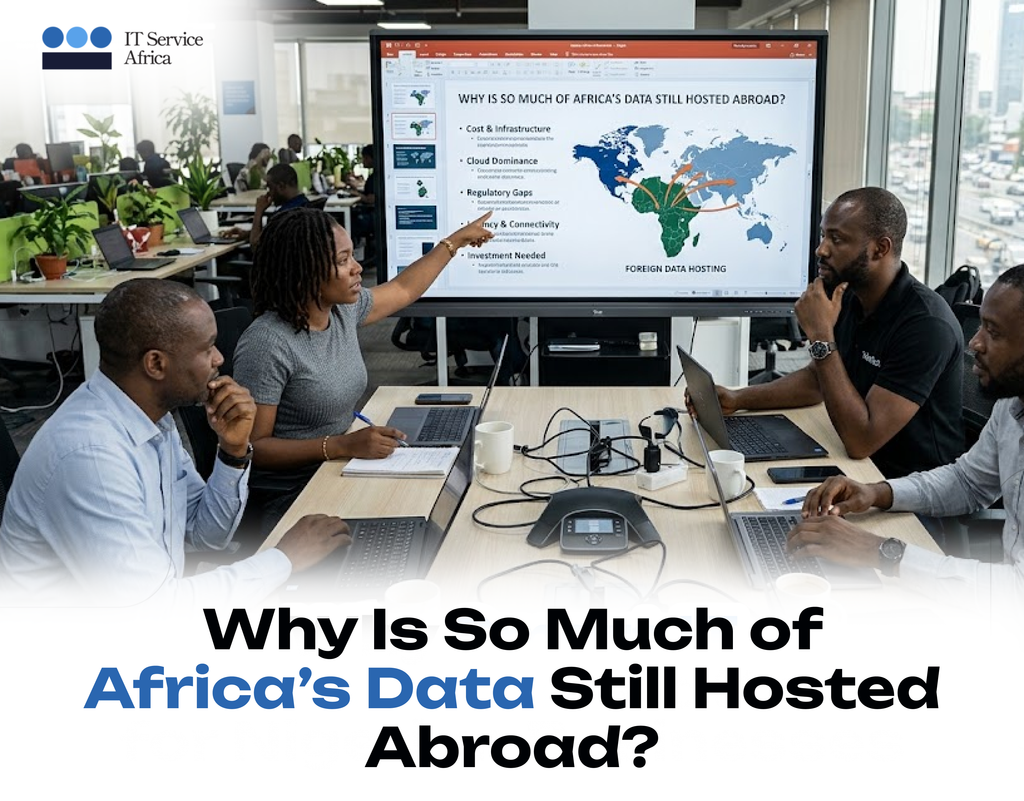
Here’s a question worth sitting with: when your business “saves to the cloud,” where does that data actually live? For a large share of African enterprises, the honest answer is Frankfurt, Dublin, or another European data hub not anywhere on the continent. How This Happened For decades, hosting data abroad was simply the practical choice. International hubs offered reliable power, dense connectivity, and mature infrastructure that local alternatives struggled to match often due to power instability, limited data center capacity, and financing constraints. Businesses weren’t being careless; they were optimizing for uptime in the infrastructure that existed. The Problem That’s Now Catching Up Countries including Nigeria and Kenya have significantly strengthened their data governance laws in the past two years. But there’s a widening gap between what regulation expects data sovereignty, local accountability, fast breach response and where the data actually sits. Hosting sensitive customer data outside the country your regulator operates in adds legal complexity, latency, and risk that many businesses haven’t fully priced in. What Local-First Infrastructure Actually Solves What Businesses Can Do Today You don’t need to build your own data center to fix this. A proper IT infrastructure design and implementation review can map exactly where your critical data lives, whether that’s still the right call, and what a realistic migration to local or hybrid infrastructure would look like without disrupting operations in the process. The infrastructure conversation in Africa is no longer just about getting online. It’s about deciding, deliberately, where your business’s most valuable asset, its data actually belongs. ITSA designs and deploys cloud, hybrid, and on-premise IT infrastructure built for African operating realities. Explore the service at itserviceafrica.com.