
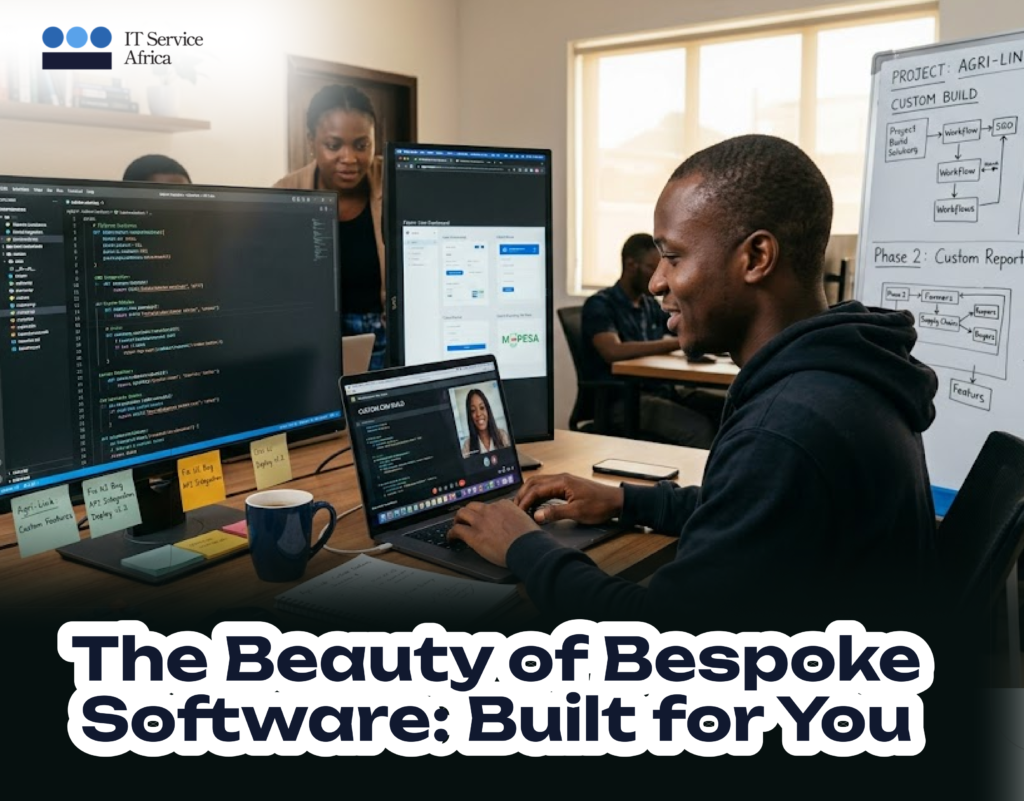
Most businesses today rely on software to run their operations. From managing customers to tracking finances, technology plays a central role.
However, many organizations use generic software that was not designed specifically for their needs.
This is where bespoke software stands out.
What is Bespoke Software?
Bespoke software is custom-built to meet the unique needs of a specific business. Unlike off-the-shelf solutions, it is designed with your processes, goals, and challenges in mind.
It is not about adjusting your business to fit the software.
It is about building software that fits your business.
Why Generic Software Falls Short
While ready-made software is convenient, it often comes with limitations:
- Features you don’t need
- Missing functionalities you actually require
- Limited flexibility
- Difficulty scaling with your business
Over time, these limitations can slow down operations.
The Advantages of Bespoke Solutions
Bespoke software offers several key benefits:
i) Tailored Functionality
Every feature is built to support your specific workflow.
ii) Scalability
The system grows as your business grows.
iii) Efficiency
Processes become faster and more streamlined.
iv) Competitive Advantage
You gain tools that competitors may not have.
When Does a Business Need Bespoke Software?
A business may need custom software when:
- Existing tools no longer meet operational needs
- Processes are too complex for generic systems
- There is a need for integration across multiple platforms
- Efficiency and automation become a priority
The Long-Term Value
Although bespoke software requires an initial investment, it often delivers greater value over time.
Instead of constantly adapting to limitations, businesses can operate with systems that truly support them.
Conclusion
The beauty of bespoke software lies in its simplicity; it works the way your business works.
In a world where efficiency and adaptability matter more than ever, having the right tools can make all the difference.
Leave a Comment